


July, 22, 2026
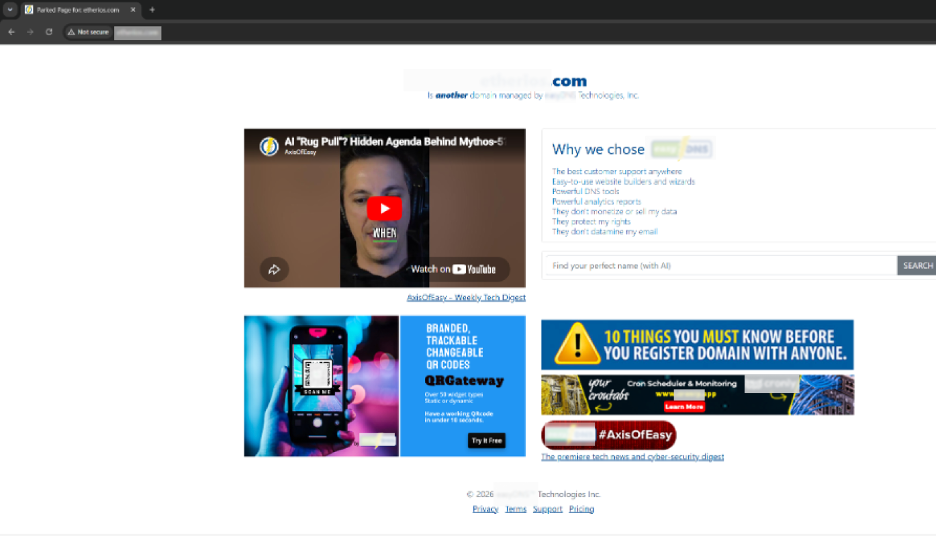
Kaspersky warns that fraudsters are exploiting the so-called ‘parked domains’ to harvest sensitive private data from unsuspecting users. These deceptive sites often masquerade as error pages or ad-filled placeholders, exposing users to privacy breaches and potential identity theft every day.
A parked domain is originally a registered web address that does not yet host a fully developed website. At first glance, these pages appear harmless, often displaying a blank screen, a "Coming Soon" placeholder, or a "Domain for Sale" notice. However, beneath the surface, these pages can execute aggressive hidden scripts. Simply visiting one of these sites can lead to silent collection of a user’s sensitive data, including IP addresses, geolocation, User-Agent details (a piece of text a web browser or an app sends to websites, which acts as an ID card) and cookie identifiers. Fraudsters can even also collect unique browser fingerprints, such as Canvas, WebGL, or Audio-fingerprinting which are used instead of normal cookies to identify a user across the internet to track their device by identifying the unique way a user’s hardware creates pictures and sounds. This data may be subsequently funneled into advertising networks to build detailed, targeted profiles without the user’s consent.
Beyond covert tracking, parked domains may pose direct security threats through malicious redirections and ‘typosquatting’ (when a user ends up on domains that differ from popular brand names by just one or two letters). Threat actors can embed scripts that automatically redirect visitors to fraudulent platforms, adult content, or online casinos. The danger is also acute with typosquatting – a simple typo can land a user on a malicious or phishing website, where cybercriminals may steal login credentials and financial information, or stealthily infect the user’s device with malware via drive-by-downloads (malicious files or software that may automatically install on your device without your knowledge or consent).
“While most users may believe that an empty webpage is completely harmless, it is a dangerous misconception. A blank page or a standard 'Domain for Sale' placeholder can secretly scan your device's digital footprint, collecting data for ad networks without your knowledge. Apart from the dangers directly related to parked domains, users may end up on phishing or malware distribution websites. Landing on either of these resources puts not only your personal data at risk, but also your financial security and corporate access safety,” comments Kaspersky expert.
To stay safe from the hidden threats of parked domains, Kaspersky recommends users: Avoid clicking on suspicious links from unknown sources, whether via email, messaging apps, or social media. Always double-check the URL for typos before entering any sensitive information. Be equipped with reliable software to block web tracking and unwanted content. Security solutions feature built-in advanced protection modules – including Anti-banner, Do Not Track (DNT), and anti-fingerprinting technology – specifically designed to prevent unauthorized data collection and stop dangerous redirect chains. If you realize you have accidentally navigated to a parked domain, an empty page, or a placeholder site, do not click on any banners or submit any contact information. Simply close the page immediately and clear the browser’s cache and cookies.
Photo Caption: Example of parked domains
Video Story