

July, 8, 2026
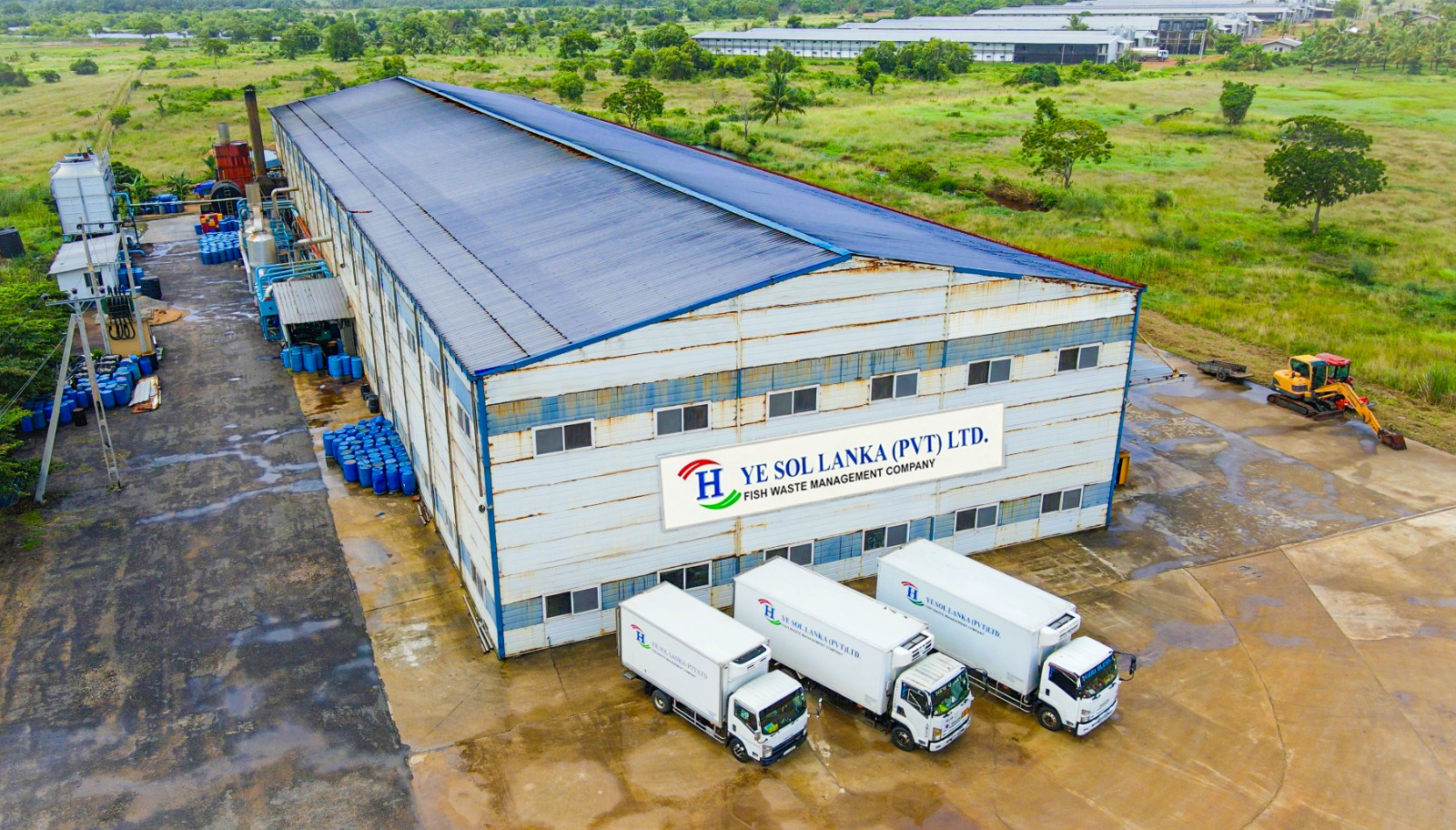
BOI-approved investment in Puttalam converts fish-processing waste into export-ready animal feed ingredients, tapping into a global marine-ingredients market worth billions
For decades, discarded fish heads, frames, viscera, and skins piling up at Sri Lanka's fish markets were treated as a costly environmental liability. Today, one Board of Investment of Sri Lanka (BOI)-approved enterprise is proving that the same waste stream can be converted into a steady source of foreign exchange, direct employment, and a cleaner coastline. The success story of Yesol Lanka, a fish-waste valorization project based in Madurankuliya, Puttalam, illustrates how Sri Lanka's under-exploited fish-processing by-products can be transformed into internationally traded animal feed ingredients.
The venture is the work of entrepreneur Vijitha Kumara Rajapaksa, who left Sri Lanka years ago as an unskilled migrant worker in South Korea. There, he spent a decade with the Hantech Group, a major animal feed manufacturer operating 43 factories and 15 large-scale production plants across South Korea, Vietnam, Indonesia, and India, using discarded fish waste as its principal raw material. Having mastered the process, Mr. Rajapaksa returned home determined to build a similar industry in Sri Lanka, bringing with him new technology and the intent to attract foreign investment.
At the time, discarded fish waste was a significant environmental burden on Sri Lanka's coastline. In areas such as Negombo, waste was routinely dumped directly into the sea, while by-products from dried-fish production were disposed of without any formal system, and local authorities bore heavy costs clearing waste collected from fish markets nationwide.
Recognising the scale of the opportunity, Mr. Rajapaksa submitted a project proposal to the BOI to collect discarded fish parts from across the island, process them into raw material for fish feed, and export the output in full. Ms. Tamari Batuwanthudawa, Senior Deputy Director of the BOI, reviewed the proposal and approved it without delay, citing four key benefits: a durable solution to a worsening environmental problem, valuable foreign exchange earnings, significant direct and indirect employment generation, and additional income for fishermen and fish-waste collectors who previously had no market for the material.
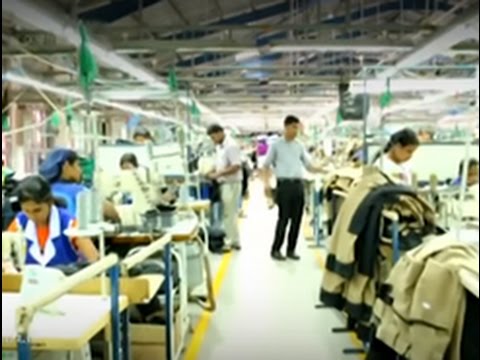
Yesol Lanka was subsequently established on a 50-acre site in Madurankuliya, backed by an investment of US$ 3 million. The factory today employs 45 people directly, alongside considerable indirect employment, and has the installed capacity to process 100 metric tons of fish waste per day — against a current island-wide collection of 50–70 metric tons daily. Fishermen and collectors are paid Rs. 20–30 per kilogram for waste that was previously discarded at a cost. Production is backed by in-house laboratory testing of every batch, with specialised machinery able to process 15 tons of waste at a time at temperatures of 120°C, meeting international quality standards.
The company now exports 30,000 to 35,000 metric tons of fish meal, fish oil and fish paste annually, earning between US$ 2 million and US$ 2.5 million a year for the country. Its client base includes CP Company of Vietnam, one of the world's leading shrimp-farming groups. Yesol Lanka has also achieved 100% Green Project status by replacing environmentally harmful export packaging with recyclable IBC boxes and plastic pallets.
Yesol Lanka's success mirrors a wider global opportunity that the BOI has identified for Sri Lanka's fish-processing sector. Converting fish waste into animal feed ingredients sits at the intersection of three fast-growing global markets: fishmeal and fish oil, fish protein hydrolysate, and the broader aquafeed complex. The global fishmeal and fish oil market, valued at approximately US$ 9.9 billion in 2026, is projected to grow to as much as US$ 19.1 billion by 2036, driven by aquaculture expansion, premium pet-food demand, and circular-economy mandates in the European Union — even as traditional wild-caught forage-fish supply remains constrained. The global aquafeed market alone, the largest downstream buyer of these ingredients, is valued at US$ 67.7 billion in 2026 and forecast to reach US$ 97.1 billion by 2031.
BOI analysis shows Sri Lanka lands roughly 480,000 to 530,000 metric tons of fish annually, generating substantial daily waste at major markets — an estimated 3 tons a day at Peliyagoda alone — yet the country currently exports less than 3% of its total catch as processed marine ingredients. Asia-Pacific already accounts for more than 42% of global fishmeal consumption and is expected to be the fastest-growing market for fish protein hydrolysate, driven by aquaculture and pet-food industries in China, India, Vietnam, Thailand, and Indonesia — markets well within Sri Lanka's reach. Moving up the value chain from raw fishmeal toward certified, hydrolysed or pet-food-grade ingredients can command two to four times the price per kilogram, provided producers meet certification standards such as MarinTrust, IFFO RS or the Marine Stewardship Council, increasingly required by premium buyers.
Speaking on the venture's progress, Mr. Rajapaksa urged Sri Lanka's youth to move beyond conventional career paths and embrace innovative, export-oriented entrepreneurship that can generate foreign exchange for the country. The BOI continues to encourage similar value-addition investments that convert environmental liabilities into export-earning industries, reinforcing Sri Lanka's growing profile as a sustainable, circular-economy investment destination.
Video Story