

August, 19, 2025
Peer-led learning spaces are transforming confidence into community change.
By Anju Moses, Head English and School Education, British Council Sri Lanka
“Before EDGE, I didn’t think I had anything important to say. Now I help others speak up too.”
This quiet reflection from a teenage girl in rural Sri Lanka speaks volumes about the power of peer-led learning.
Across Sri Lanka, classrooms are filled with ambition and potential. Girls are showing up, determined and hopeful, aiming to become doctors, engineers, and teachers. With near gender parity in literacy and more than 97% of girls completing lower secondary school, the country has made impressive strides in education access.
But numbers don’t tell the full story. After Grade 9 (around age 14), many girls begin stepping back from education. This isn’t due to lack of ability—but to a complex mix of financial hardship, caregiving responsibilities, early marriage, and social expectations. In estate communities like Matale, dropout rates for girls can be as high as 8.4% by Grade 5—compared to the national average of 1.4%.
For boys, rising economic pressures often lead to early entry into labour, cutting their education short. What both groups face is the same challenge: a lack of voice, confidence, and supportive role models.
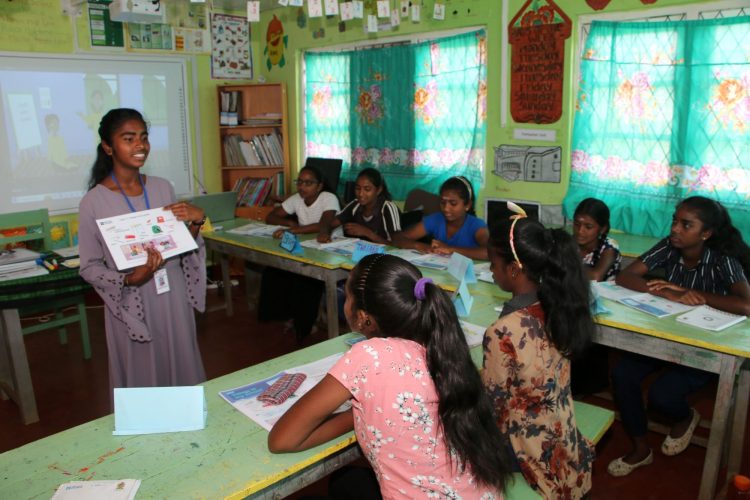
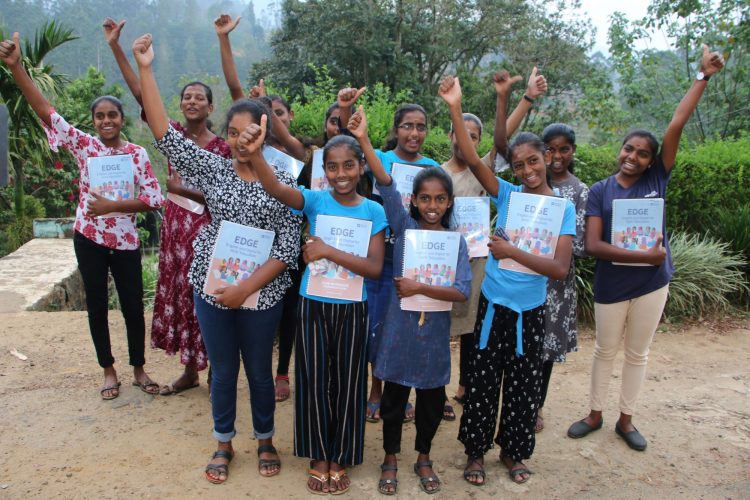
That’s where programmes like EDGE (English and Digital Skills for Girls’ Education) come in. Based on the simple insight that girls learn best from each other, EDGE trains adolescent girls as Peer Group Leaders (PGLs), who then run local learning circles. These circles focus on English and digital skills, but more importantly, they create space for girls to find their voice, build confidence, and take on leadership roles.
In EDGE clubs, we’ve seen remarkable transformations. A shy 14-year-old who once doubted her ability to speak now leads her peers in ICT lessons when no teacher is available. Families, too, are starting to shift their perspectives as they see girls taking initiative and inspiring others.
This kind of peer-led learning doesn’t just benefit girls—it uplifts entire communities. When one girl believes in herself, she opens doors for others: her brothers, cousins, friends.
True education isn’t just about access. It’s about agency. When girls are given the chance to lead on their own terms, everyone moves forward.
Reimagining education through peer-led learning
Sri Lanka has made significant progress in improving access to education, especially for girls—but enrolment alone isn't enough. The challenge now is ensuring girls not only stay in school but thrive with the 21st-century skills they need: communication, collaboration, and digital literacy.
Peer-led models like EDGE (English and Digital Skills for Girls’ Education) bring learning directly into communities. Instead of waiting for solutions from the top down, EDGE trains adolescent girls aged 13–19 as Peer Group Leaders (PGLs). These leaders run informal clubs that support growth in English, digital literacy, and life skills, creating safe spaces where girls learn together and gain confidence.
A long-term evaluation across South Asia shows EDGE has reached over 20,000 girls and trained nearly 2,000 PGLs. Early results in Sri Lanka show similar improvements in self-expression, engagement, and leadership potential.
EDGE also redefines leadership. Girls take ownership of learning, facilitate sessions, and inspire change. As one participant shared, “I never thought I’d teach others—now I lead our group.” Community perceptions shift too, as girls are seen not just as students, but as role models.
Because PGLs facilitate clubs locally, EDGE scales efficiently, especially in underserved areas. However, deeper impact requires more investment—in digital access, mentorship, and public-private partnerships.
EDGE is more than a skills programme. It’s a blueprint for equity and resilience. With the right support, peer-led learning can transform education—and futures—for young women across Sri Lanka and beyond.
Evidence of the change
The impact of EDGE is best seen through stories like Fathima Samha Niyas from Colombo. She shares,
“Before joining EDGE, I couldn’t speak English or use a computer. Becoming a Peer Group Leader changed my life. Now, I want to become a teacher.”
“We get to express our opinions without fear.”
Fathima’s experience reflects wider programme outcomes. Across South Asia, EDGE has trained over 2,000 Peer Group Leaders (PGLs), creating a decentralized leadership pipeline that supports strained education systems, especially in under-resourced areas. These girls aren’t just learners—they are teachers, organisers, and community leaders.
Impact data highlights:
In Sri Lanka, monitoring shows growth in self-expression, leadership in clubs, and greater engagement in school and community life.
EDGE’s peer-led model is uniquely scalable. By empowering PGLs within communities, clubs expand with minimal infrastructure, building sustainability and trust. Girls become agents of change without burdening existing systems.
While success stories abound, challenges remain—digital access, caregiving demands, and gender norms continue to limit full participation. EDGE is a strong start, but broader support is essential to reach its full potential.
Scaling what works: A vision for sustainable youth empowerment
As peer-led models like EDGE continue to demonstrate success, the challenge now is scale and sustainability. In Sri Lanka’s evolving educational landscape, marked by teacher shortages and shifting needs, peer-led learning offers a viable, scalable solution that empowers young people to lead, support one another and build critical life skills.
This is not just about girls, it’s about all youth gaining the confidence, English language proficiency, digital literacy and social skills needed to navigate a changing world. When implemented with the right training and support, peer-led programmes can advance gender equity and leadership among both girls and boys, while also easing pressure on an overstretched education system.
Sustaining this model means investing in local leadership, ensuring oversight and quality through trained facilitators and addressing barriers like food insecurity, transport and digital access. British Council’s experience and global network bring technical expertise in English, digital skills and social learning, but long-term impact depends on partnership and aligned collaboration in this space to make a long term, meaningful difference to these young lives.
Empowering youth transforms nations
Youth empowered with skills, voice, and agency become changemakers in families, communities, and society. They drive economic inclusion, social cohesion, and peacebuilding, especially in fragile contexts. When education embraces innovation and equity, and girls and boys are seen as partners, the impact reaches far beyond classrooms.
Sri Lanka has a chance to lead in reimagining youth education and empowerment. The evidence and tools exist; now, it’s about uniting will and partnerships so no girl or boy is left behind.
Collective action is essential. Governments, private sector, and civil society must ensure peer-led spaces move beyond pilots to become core parts of education systems. Industry partners can support internships, digital infrastructure, and career readiness. Community leaders, parents, and educators must foster environments encouraging young people especially girls to speak up, lead, and envision new futures.
“I never thought I could be a leader – until I was” is more than a title it’s a movement. Peer-led learning is turning confidence into community change.
Multiply that voice by thousands of girls and boys long left behind and you hear the sound of a nation transforming.
Video Story