

October, 12, 2026
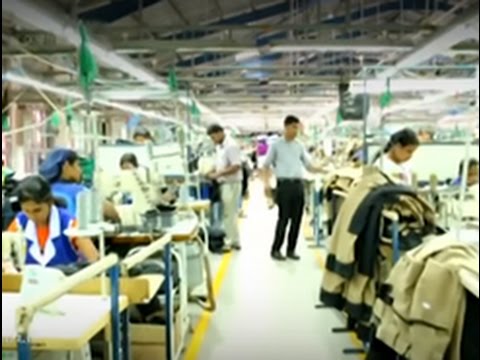
Sri Lanka's plantation sector is entering a new phase of transformation, as technology and innovation reshape how estates operate, manage resources and sustain productivity. Across the country's tea estates and other plantations, machines are increasingly complementing skilled workers in tasks once done almost entirely by hand, while software and data bring new precision to decisions traditionally guided by experience.
Automated harvesters, pruning machines and drones are being deployed alongside GIS mapping, digital weighing systems and enterprise software. Though the technologies vary, they point to a common shift: plantations are finding smarter ways to meet rising demands with a changing workforce.
Mechanisation, however, is not without challenges. Sloping terrain, fragmented fields and crop variability limit where machinery can be effectively deployed. Still, as operating costs rise and labour availability tightens, the ability to combine human expertise with technology is becoming essential to sustaining productivity, competitiveness and the long-term viability of the industry.
Addressing the labour shortage
Sri Lanka’s plantation companies face a labour market that has changed from the one on which the industry was built. Migration, demographic changes and attraction from other sectors have made it increasingly difficult to retain workers for plantation work.
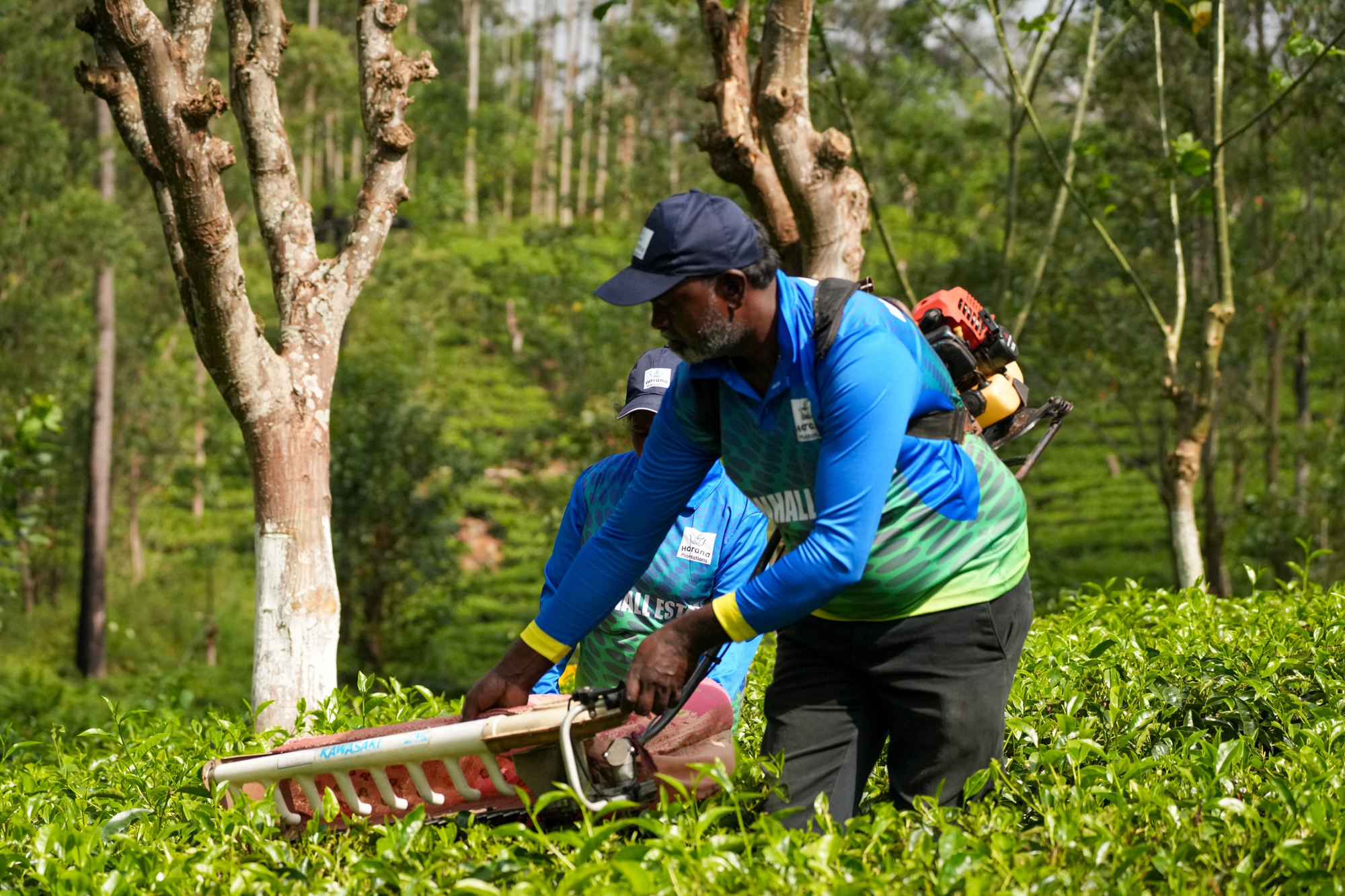
That is why mechanization is spreading beyond the most obvious applications. At Bogawantalawa Tea Estates PLC, machinery is being used for land preparation, pruning, weeding, harvesting, and agrochemical application. Selective machine harvesting and mechanical pruning have been introduced in tea, while mechanized and semi-mechanized methods are being extended to other crops.
Agarapatana Plantations PLC has taken a similar approach. Fuel-powered and battery-operated harvesters are being used in the field, while backhoes assist with uprooting and levelling new clearings. Drones are being deployed for foliar spraying. In factories, automation and energy efficient machineries are being introduced where production volumes justify the investment.
The changing face of plantation technology
Beyond mechanisation, plantations are steadily evolving into data-driven businesses, with RPC’s increasingly adopting technologies that are reshaping day-to-day operations. Agarapatana Plantations is rolling out automated green-leaf weighing systems with facial recognition and planning fertigation-based irrigation. Ten factories already operate on solar power, with six of them being carbon neutral.
Likewise, Elpitiya Plantations PLC has introduced Ballotronix tea-leaf readers to assess leaf composition, supported by iHarvest and Microsoft Dynamics 365 Business Central, giving managers real-time visibility across thousands of hectares.
Talawakelle Tea Estates PLC has similarly pursued transformation since 1992, introducing hot-water boilers across all factories from 2008, electronic weighing with real time data collection since 2015, as well as tablets, computers and a new payroll system for employees. Rooftop solar along with three in-house hydro power plants located in Palmerston, Radella and Somerset estates provide renewable energy. State of the art, modern colour separators have been provided to its Low Grown factories. Since 2025, drones are been used for chemical/ foliar spraying. These developments highlight how the plantation sector has steadily embraced technology for greater efficiency and sustainability.
The technological shift does not stop at the edge of the field as factories are becoming increasingly automated, giving special emphasis to energy efficient equipment. At Elpitiya, more than 80% of their factories are mechanized with state of the art machineries, with the intention to raise both capacity and efficiency.
On the other hand, Malwatte Valley Plantations PLC illustrates another possibility. After expanding its cinnamon cultivation, the company encountered a shortage of skilled peelers. Its engineers responded by developing and patenting cinnamon-peeling machinery.
That is more than a labour-saving exercise. It shows how a constraint can encourage technological innovation- and potentially allow an industry to expand beyond the limits imposed by the supply of specialised labour.
The company is also investing in automated factory systems and machinery for “matcha” production. Technology, in this case, is being used not merely to reduce costs but to strengthen value addition to products.
Machines will not make workers obsolete
Workers are being trained to use harvesters, pruning equipment and spraying machinery, while new roles are emerging around upkeep, data collection and digital reporting.
Horana Plantations PLC, for instance, has introduced machine plucking to address labour shortages. The company reports improvement in yields, consistency and labour productivity, while technology-driven harvesting has also been used to make plantation work more attractive to younger workers.
“Technology has become a prerequisite requirement for the plantation sector as we deal with labour shortages and the need to improve productivity,” Secretary General of the Planters’ Association of Ceylon, Lalith Obeyesekere stated. He noted that priority should be given to technologies suited to Sri Lankan conditions, supported by training and enabling workers to use them effectively. “That is a more useful way of thinking about mechanisation than simply counting the jobs a machine might replace”, Obeyesekere went on to note. He is confident that these changes will raise the productivity and profitability in the sector.

The next harvest
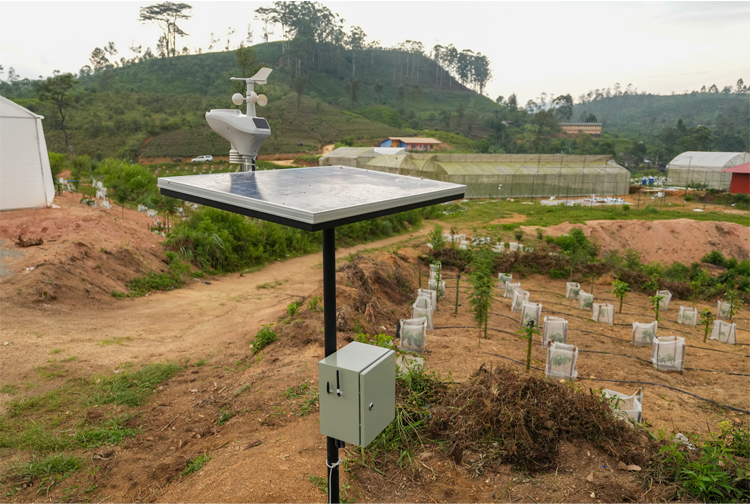
The direction of travel is becoming clearer. Precision agriculture, digital crop forecasting, automated weather monitoring, smart irrigation, digital traceability and further mechanisation are likely to become more common.
That does not mean the end of the plantation worker, nor the disappearance of generations of agricultural knowledge. It means that both will increasingly operate alongside technology.
For an industry whose competitiveness has long depended on its ability to extract value from land and labour, the new imperative is simpler: create more avenues, waste less and make each worker- and each hectare- more productive.
Video Story