

August, 20, 2026
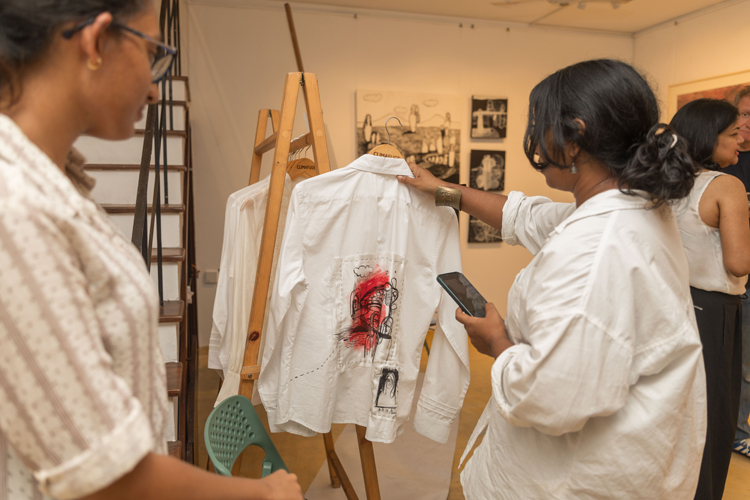
More than 20 Sri Lankan artists responded to climate change through their creative practices, perspectives, and own experiences at ‘Communicating Climate Change: An Artistic Perspective,’ held from 14–16 August at Art Rhizome in Colombo.
Organised by ClimaComms, EthicalX: Climate & Innovation Hub, divertico, and c.fuge, the exhibition explored the realities, challenges, and possibilities of climate change through original artworks, as well as opportunities for engagement through thematic discussions, live art, and networking sessions.
Climate change affects many aspects of everyday life, from food systems, health, and livelihoods to migration, oceans, and the ways people produce, consume, and live. In addition to scientific evidence, research, and policy discussions, effective communication plays a key role in creating change and finding effective solutions to the climate crisis.
As an effort of a collective of different stakeholders, the exhibition explored the role of art and fashion for better communicating climate change, as well as changing lifestyles. It featured themes of climate resilience, health, adaptation, migration, food systems, oceans, and loss and damage.
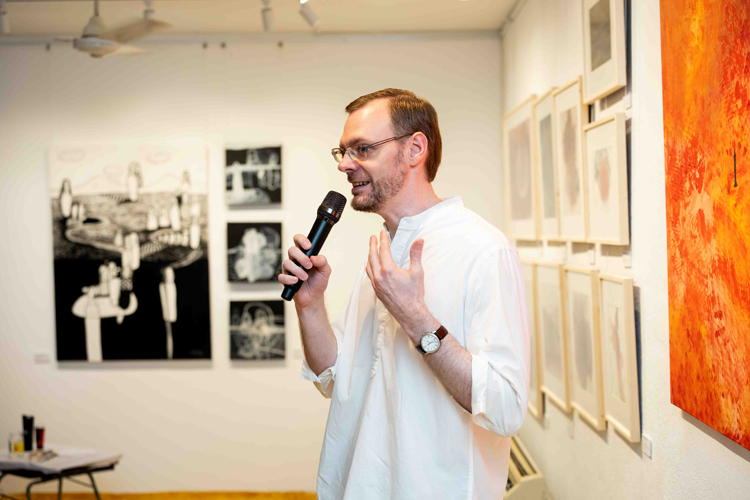
“The idea was to create a space for conversation around how art and climate communication come together. Art can help unlock aspects that are difficult to unlock through science and policy briefs alone, by looking at the emotional side of climate change and the different ways it impacts people,” said Dennis Mombauer, Director: Research & Knowledge Management of Clima Trust.
The exhibition further focused on how fashion could play a key role in communicating climate change.
“Climate change is common to all, but solutions could be approached individually as well as collectively. Art that shares a key message could link with creative expression of fashion to promote a stronger message through our daily lifestyle choices, such as clothes,” said Vositha Wijenayake, representative of c.fuge, an ethical and climate-friendly brand co-hosting the event.
The theme of loss, as well as mental health was a core theme present in many works featured at the exhibition. One of the artists, Prabath Samarasooriya, explored the emotional response to ecological loss and changing landscapes in his art.
“I want people to connect with the landscapes and nature represented in my work through their own memories and experiences. There is a sense of nostalgia and melancholy in seeing familiar environments being changed or lost through human activity. Through colours, textures, and distorted natural forms, I also explore eco-anxiety and the emotional impact that ecological collapse and climate change can have on us,” he said.
The connection between climate change and mental health was also reflected in the work of artist Sakunthala Peiris.
“My art often reflects mental health and mental health awareness, and this exhibition gave me an opportunity to explore that in the context of climate change. We often think about climate change in terms of what is happening to the environment, but its impacts are also experienced by individuals and communities,” she said.
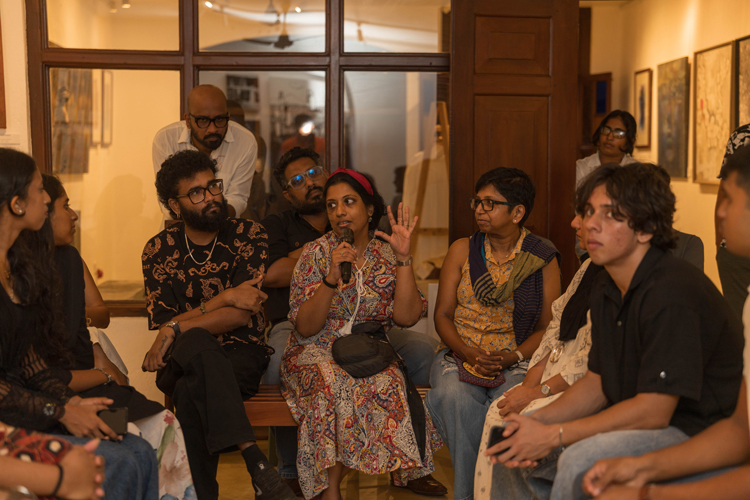
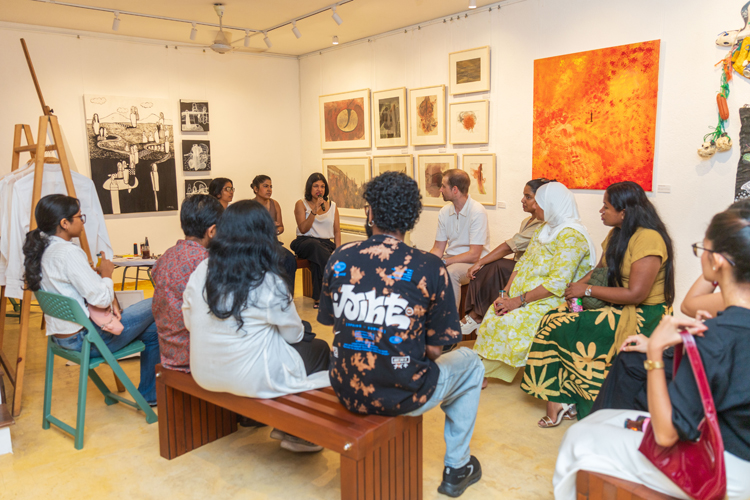
The exhibition opened on 14 August with an evening reception attended by participating artists and guests from the creative, climate, development, and other sectors. The programme also included dialogues and networking sessions. The first thematic dialogue held on 25 August focused on climate, fashion and mindful living.
The second dialogue and networking event held 16 August featured engagement on climate, food systems, livelihoods and resilience.
These dialogues highlighted the need to communicate climate change in different ways to different audiences, and the role that art and creative expression can play in starting conversations around complex climate-related issues. The discussions also looked at how climate communication can connect climate change with people’s everyday experiences and choices, including what they wear, what they eat, and how they consume.
The exhibition forms the first step of engagement in exploring the links between climate, art and fashion, as it expands to further activities on engagement with the creative and artistic community to identify effective ways for reaching audiences and driving climate solutions.
The Sunday Times, Daily Mirror, and Daily FT were the exclusive print media partners for the exhibition.
Video Story