

August, 31, 2020
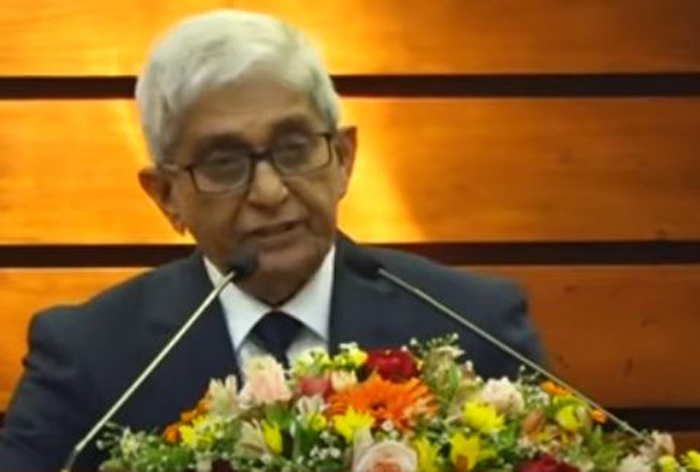
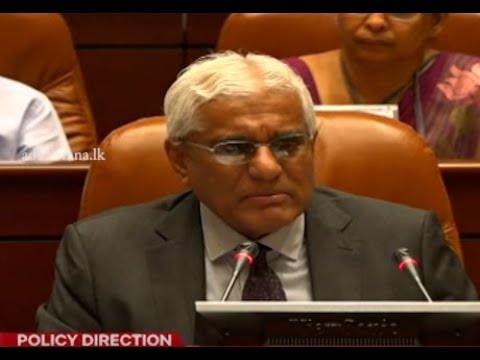
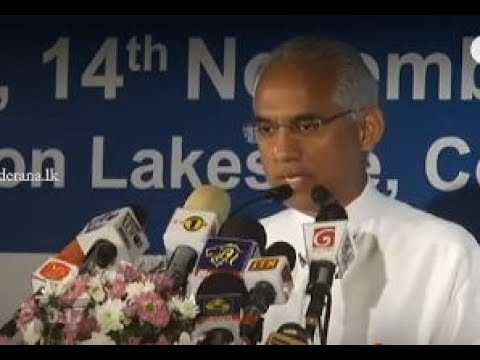
Discussions are underway to set up a new development bank to fund the Small and Medium Scale Enterprises (SMEs), Central Bank Governor Prof. W. D. Lakshman stated.
The Governor added that a permanent credit guarantee institution will also be set up which will guarantee a risk credit given by banks to COVID-19 hit firms.
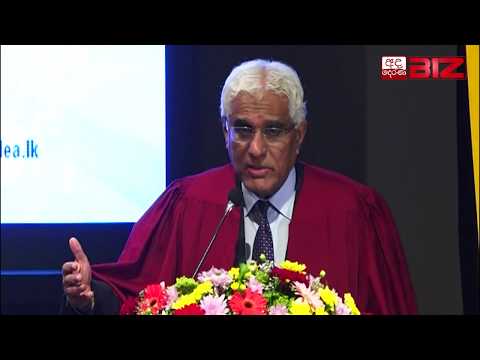
“Central Banks playing their role as the agents of development have used credit controls to modify the pattern of credit availability and to influence credit allocation patterns and interest rate structures. Market forces do not necessarily channel credit flows towards sectors that have the potential to generate employment and add value to the domestic economy. Central Bank therefore occasionally acted to directly intervene in respect of credit allocation patterns. At present, a mandatory lending requirement of 10% of the total credit granted is in place in favor of agriculture. The inherent risk associated with this important economic sector and the consequent hesitance on the part of banks to lend to agriculture were the factors responsible for this direct credit allocation intervention. The credit schemes operated by the Central Bank itself were also taken into consideration, the reluctance of banks to lend to the small and medium scale enterprises. Discussions are underway in the Central Bank now to establish a national entrepreneurship development bank that could support SMEs and Startups. Also under discussion is the plan to introduce a permanent credit guarantee institution. The greater success in this intervention requires successful action elsewhere in the economy. Careful management of export, import trade activities in important areas of export-oriented and import replacing production and in sources of inflow of foreign exchange. We are confident that the ongoing focused effort of the government will help break this vicious cycle of current account deficits and over-reliance on foreign debt,” Prof. Lakshma said at a lecture given to mark the 70th anniversary oration of the Central Bank of Sri Lanka.
The oration reflected on "Central Banking in the Sri Lankan Development state."
Governor further stated that the Central Bank of Sri Lanka will closely work with the fiscal authorities and government policy in a developmental state under the alternative policy framework that is being developed.
“In the emerging developmental state, the central bank stands ready and is willing to join hands with fiscal and policy planning authorities to help open the vistas of prosperity for the benefit of the people. Having experimented with different development policy stances and frameworks, Sri Lanka has now arrived at a warship watershed like situation where the people seem to have opted for shared and inclusive socio-economic development through a state-guided policy regime.”
Speaking further he also expressed the following;
“The concept of Central Bank independence implies that no Central Bank should be subject to pressures from the Government to finance its activities and expenditures. It probably does not leave room for even collaborative development – targeted activities of fiscal – monetary authorities.”
“The dominant focus on avoidance of inflation implies that the Central Bank should not be directly concerned with objectives like full employment and development. However, one could argue that even in the strictest practical inflation targeting regimes, a Central Bank seeks to achieve price stability by stabilising the economy around its potential, which is an indirect acceptance of the importance of maximum employment.”
“In relation to the indirect instrument of interest rate, the Central Bank has broadly allowed market forces to determine lending and deposit interest rates while guiding them with policy interest rates. Although with hesitation, the Bank has recently moved to exercise intervention in markets to keep Treasury bill and bond rates at low levels.”
“This has helped to maintain a low-interest rate regime for promotion of developmental expenditures and of source, to ease the fiscal burden of debt repayment. However, there has been widespread criticism of stubbornly high margins kept by banks, and sluggish and asymmetric adjustments in their lending rates, in response to changes in policy and other rates under Central Bank control.”
“The Central Bank has intervened from time to time by introducing regulated interest rates to rectify these adverse outcomes at least to some extent, although these are frowned at by the banking community.”
“The latest in this type of intervention is comprises regulation of interest rates on credit card advances, pawning and temporary overdrafts, as well as on chargeable penal interest rate margins. The need for such intervention was felt even in 2019, during which regulations on, both deposit and lending rates of banks were introduced. The Central Bank has generally attempted during its period of existence to keep its policies and measures within the confines of the relevant mainstream thinking as defined by the MLA of 1949 as marginally revised subsequently.”
Video Story