Reuters - Oil prices fell more than $1 on Thursday as forecasters
lowered global oil demand projections for 2026 because of the disruptions from the U.S.-Israeli war on Iran, though the supply constraints from the conflict provided a floor for the market.
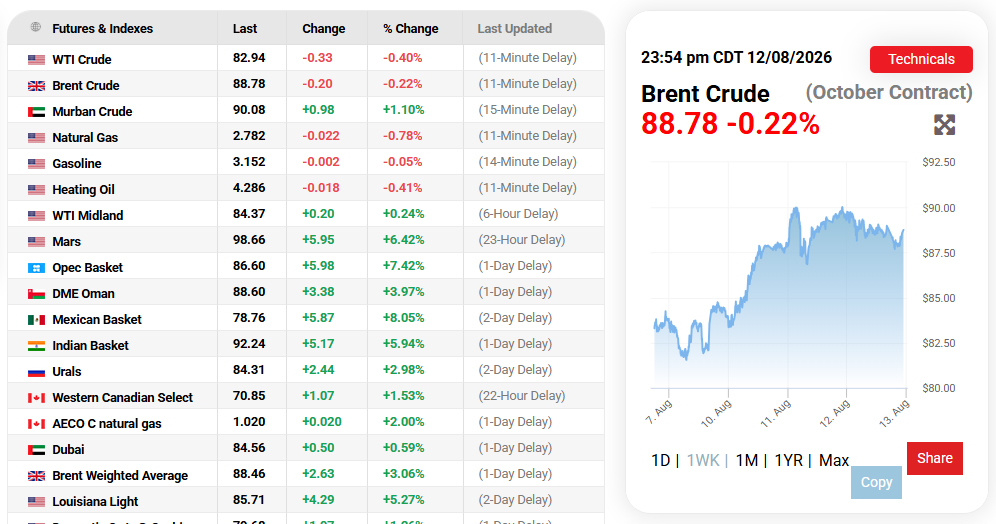
Brent futures dropped $1.29, or 1.5%, at $87.69 a barrel by 0100 GMT. U.S. West Texas Intermediate (WTI) crude fell $1.30, or 1.6%, to $81.97.
The Organisation of Petroleum Exporting Countries lowered its world oil demand growth forecast for 2026 to 580,000 barrels per day in its monthly oil market report on Wednesday.
On the same day, the International Energy Agency
said it expects a 1.6 million bpd contraction in consumption this year, down from a forecast of 1 million bpd last month, because of restricted fuel supplies and higher prices from the U.S.-Israeli war on Iran that have curtailed demand.
Oil prices were also under pressure from a surprise build in U.S. commercial crude oil inventories, which posted their largest weekly gain since January 2023 last week as exports slumped, the Energy Information Administration said on Wednesday.
Crude inventories rose by 17.4 million barrels to 424.4 million barrels in the week ended August 7, their highest since June 5, the EIA said, compared with analysts' expectations in a Reuters poll for a 1.4 million-barrel draw.
Still, the
deadlocked talks between Iran and the U.S. to end the war in the Gulf have kept prices elevated.
A senior Iranian source said on Wednesday that there had been no progress in talks to revive the interim deal agreed in June and define a time frame to implement it.
Attacks on shipping in the Strait of Hormuz and the Bab el-Mandeb Strait on Tuesday, two crucial export routes for Middle Eastern oil and gas, highlight the risks that remain for crude supply from the region.
"The safety situation for navigation in these waters has further deteriorated, forcing vessels to
turn off their signals, which reduces transparency in shipping and makes it more difficult for the market to track and assess actual supply levels," analysts at Haitong Futures said in a note.