

April, 30, 2026
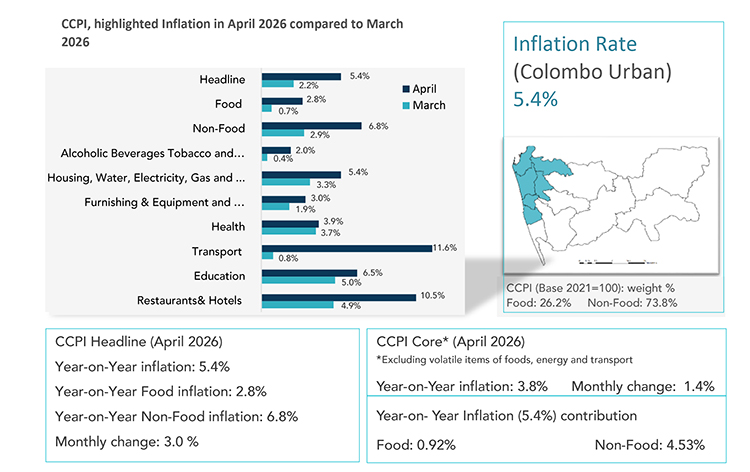
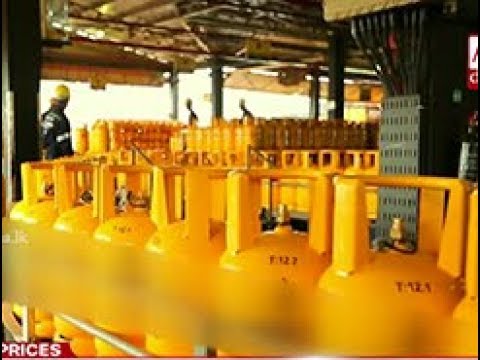
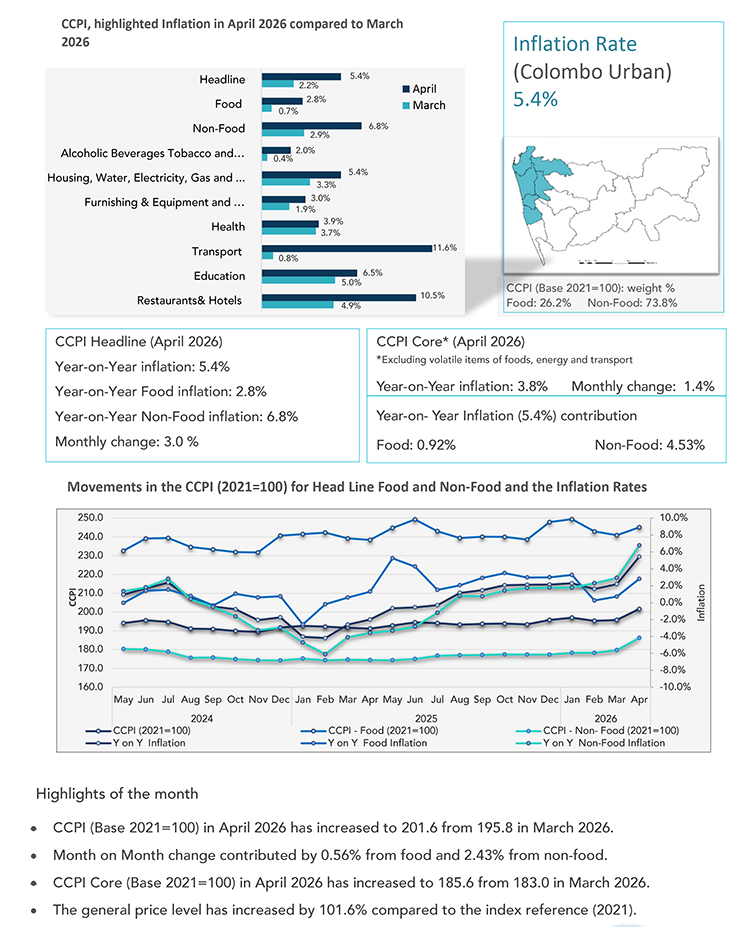
According to the latest data from the Department of Census and Statistics, the surge was primarily driven by the Non-Food category, where inflation jumped to 6.7%. This is a substantial increase from the 2.9% recorded in the previous month. A major contributor to this spike was the Transport sub-category, with significant price hikes in Petrol (up by Rs. 91.18 per liter) and Diesel (up by Rs. 88.82 per liter). Additionally, utility costs saw a sharp rise, with the average price of a 12.5kg LP Gas cylinder increasing by Rs. 595.81 and Electricity bills rising significantly.
Food inflation also trended upward, reaching 2.7% in April 2026, compared to 0.7% in March. Consumers faced higher prices for essential staples such as Samba rice, which rose by Rs. 11.22 per kg, and Chicken, which increased by over Rs. 55 per kg. Other items showing notable price increases included Eggs, Coconut Oil, and Dried Chilies.
However, some relief was noted in specific food items. The price of Kekulu Red rice decreased, as did the prices of various vegetables including Capsicums, Beetroots, and Tomatoes. Fruit prices for Papaw and Mangoes also saw a downward trend during the month.
This rapid acceleration confirms earlier projections by the Central Bank of Sri Lanka (CBSL). In its March press release, the CBSL noted that inflation was expected to reach the 5% target in the second quarter of 2026, earlier than previously anticipated. While the target has been met, the Central Bank has cautioned that the outlook remains subject to elevated uncertainty due to global geopolitical tensions, particularly in the Middle East, which could continue to impact domestic prices.
As the country moves further into 2026, policymakers will be monitoring whether inflation remains stable around the 5% target or if further adjustments are needed to manage the rising cost of living.
Video Story