

August, 21, 2026
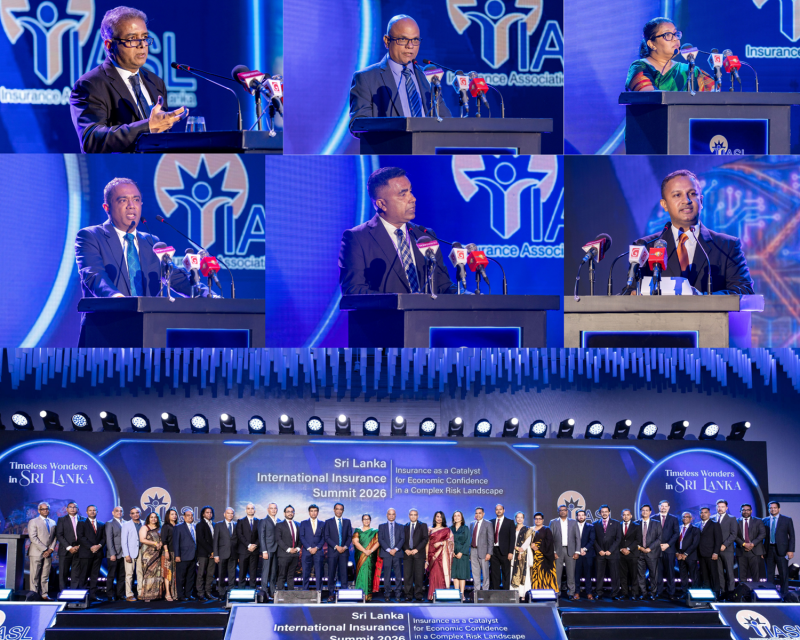
The Sri Lanka International Insurance Summit 2026 concluded in Colombo following three days of high-level discussions focused on strengthening the role of insurance in building economic confidence, protecting communities and supporting sustainable growth amid an increasingly complex global risk environment.
Organised by the Insurance Association of Sri Lanka, the second edition of SLIIS was held from 10 to 12 August at Cinnamon Life under the theme, “Insurance as a Catalyst for Economic Confidence in a Complex Risk Landscape.”
The Summit brought together 500+ delegates representing, including insurance leaders, regulators, policymakers, reinsurers, brokers, technology specialists, financial sector professionals and business representatives. The Summit also brought together 41 distinguished speakers, including 13 international experts and 28 local leaders, representing a broad spectrum of expertise across the life and general insurance sectors.
Building on the inaugural edition held in 2024, SLIIS 2026 reinforced Sri Lanka’s position as a regional platform for insurance knowledge-sharing, professional development and international industry collaboration.
The Summit commenced with an official inauguration and networking reception on 10 August. The inauguration was graced by Chief Advisor to the President on Digital Economy Dr. Hans Wijayasuriya as Chief Guest, together with Insurance Regulatory Commission of Sri Lanka Chairman Dr. Ajith Raveendra De Mel and Director General Damayanthi Fernando as Guests of Honour.
Discussions throughout the Summit highlighted the need for insurance to evolve from a primarily reactive mechanism for compensating losses into a strategic contributor to national resilience, business continuity, financial inclusion and long-term economic development.
IASL President and Executive Director and CEO at HNB Life, Lasitha Wimalaratne said the Summit demonstrated the value of bringing global knowledge and local experience together at a time when risks were becoming increasingly interconnected.
“SLIIS 2026 provided an important opportunity for the industry to examine how insurance can contribute to economic confidence while responding to new and evolving risks. The discussions reflected the need for stronger institutions, sound governance, responsible innovation and closer collaboration among insurers, regulators, governments and businesses,” Wimalaratne said.
“The participation of distinguished local and international speakers demonstrates the relevance of Sri Lanka as a platform for professional exchange and industry collaboration. Our next priority is to translate the knowledge and perspectives shared at the Summit into practical action that benefits policyholders, businesses and the wider economy,” he said further.
The technical programme on 11 August opened with a discussion on climate and catastrophe resilience, examining infrastructure protection, parametric insurance and risk management frameworks. Participants considered how data, modelling and innovative insurance mechanisms could improve preparedness for climate-related and catastrophic events.
A session on microinsurance and financial inclusion explored approaches to expanding protection among underserved communities. Discussions highlighted the importance of affordable products, accessible distribution channels, customer education and partnerships that can extend insurance coverage to individuals and enterprises currently outside the formal protection system.
The programme also examined the future of motor insurance as electric vehicle adoption, telematics and data-driven pricing begin to reshape the sector. Speakers discussed the implications of new vehicle technologies, changing risk profiles and the growing use of real-time data in underwriting, pricing and claims management.
Technology emerged as another central theme, with a dedicated session examining artificial intelligence, automation and advanced analytics as strategic differentiators. The discussion focused on how insurers can use technology to improve operational efficiency, strengthen risk assessment, personalise customer experiences and respond more effectively to emerging threats.
The final day addressed the implications of global demographic shifts and changing lifestyles for insurance products, distribution models and customer engagement. Speakers considered how ageing populations, evolving employment patterns and changing household structures are influencing demand for protection, savings and retirement solutions.
The reinvention of life and health insurance was explored through discussions on digital transformation, wellness integration and retirement security. Participants examined how insurers can move towards preventive, customer-centred models that encourage healthier lifestyles while providing greater financial security throughout different stages of life.
The implementation of IFRS 17 and IFRS 9 was also discussed, with speakers examining how the standards have changed the measurement of insurance performance, profitability and balance-sheet strength. The session highlighted the importance of stronger data capabilities, financial discipline and closer alignment among actuarial, finance, risk and technology functions.
The Summit concluded with a discussion on embedding environmental, social and governance principles into insurance strategy. Participants considered how insurers can move beyond compliance by incorporating sustainability into underwriting, investment decisions, product development, corporate governance and long-term risk management.
Roshan Peiris, Chair of the IASL Marketing & Sales Forum and Senior General Manager – National Distribution, Softlogic Life, said, “The conversations at SLIIS 2026 addressed the areas that will influence the future competitiveness and relevance of the insurance industry. These include changing customer expectations, emerging distribution models, digital transformation, financial inclusion and the growing demand for products that respond to new lifestyles and risks,” Peiris said.
SLIIS 2026 Project Chair and Chief Marketing Officer of Union Assurance, Mahen Gunarathna said, “The Summit created an environment where global and local stakeholders could establish meaningful professional relationships, exchange perspectives and explore future partnerships. The diversity of speakers and participants enabled delegates to gain a broader understanding of the developments influencing insurance across Sri Lanka, South Asia and international markets,” Gunarathna said.
The Insurance Association of Sri Lanka stated that the insights and recommendations generated through SLIIS 2026 would support continued industry dialogue on resilience, innovation, inclusion, governance and sustainable growth.
Video Story