

May, 1, 2026
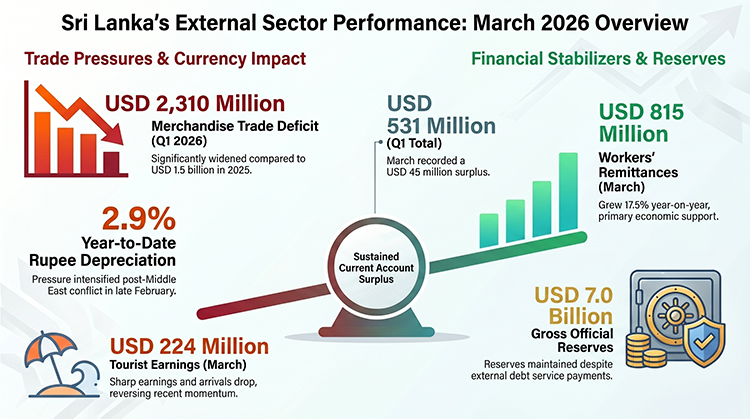
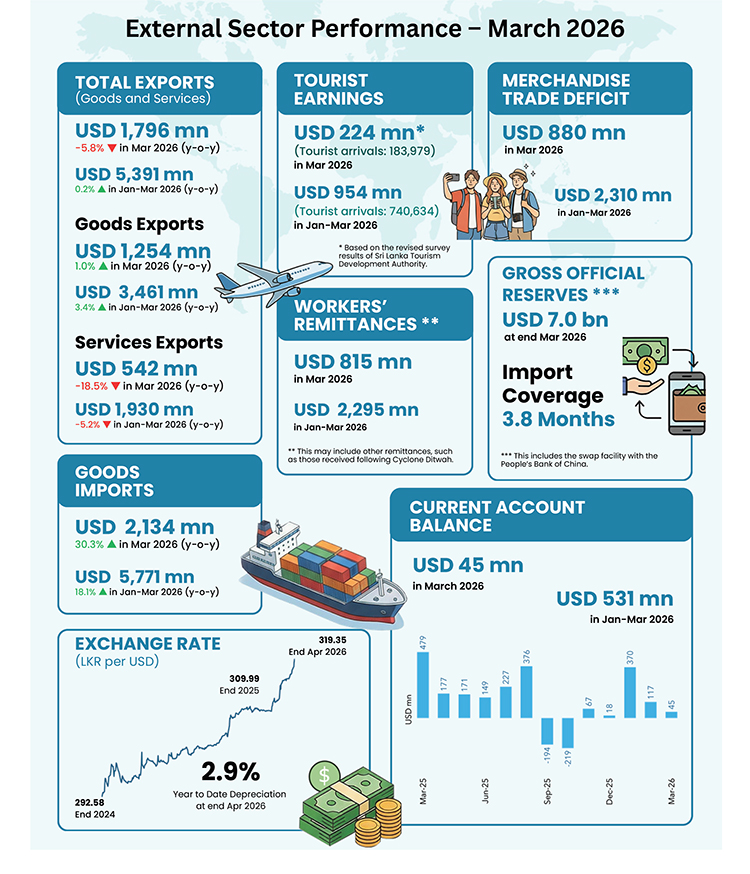
Sri Lanka’s external current account recorded a marginal surplus in March 2026, bringing the total cumulative surplus for the first quarter of the year to USD 531 million. Despite this overall positive balance, the period was marked by significant volatility driven by the ongoing war in the Middle East, which has simultaneously driven up fuel costs and deterred international travelers.
Widening Trade Deficit Driven by Fuel and Vehicles
The merchandise trade deficit experienced a notable expansion, reaching US$ 2.3 billion in the first quarter of 2026, compared to US$ 1.5 billion during the same period last year. This widening was largely fueled by a 74.7% year-on-year surge in fuel import expenditure, which rose to US$ 630 million in March alone due to rising global prices and increased volumes. Additionally, vehicle imports, comprising both personal and commercial units, contributed US$ 195 million to the month’s import bill.
Tourism Faces Setbacks Amid Regional Conflict
The services sector, traditionally a pillar of the external account, saw its surplus decline sharply by 42.4% in March. The Central Bank noted that tourist arrivals contracted by 19.8% year-on-year to 183,979 visitors, reversing previous growth trends. This downturn, attributed to the Middle East conflict, resulted in March tourist earnings falling to US$ 224 million, while cumulative earnings for the quarter dropped by 15% compared to 2025.
Remittances Provide Vital Support
In contrast to the challenges in trade and tourism, workers' remittances remained a critical source of stability. Remittances grew by 17.5% in March to reach US$ 815 million. On a cumulative basis, the first quarter saw a robust 26.5% increase in inflows from Sri Lankans working abroad, totaling nearly US$ 2.3 billion.
Reserves and Currency Performance
Sri Lanka’s Gross Official Reserves stood at US$ 7.0 billion at the end of March 2026. While the Central Bank engaged in net foreign exchange purchases, the overall reserve level saw a decline during the month primarily due to external debt service payments.
The impact of regional instability also weighed on the currency. By the end of April 2026, the Sri Lankan rupee had depreciated by 2.9% against the US dollar for the year, as the Middle East conflict continued to exert pressure on the external sector.
According to the Central Bank of Sri Lanka, the terms of trade also deteriorated marginally during the first quarter, as the decline in export prices outpaced the reduction in import prices.
Video Story