

June, 9, 2026
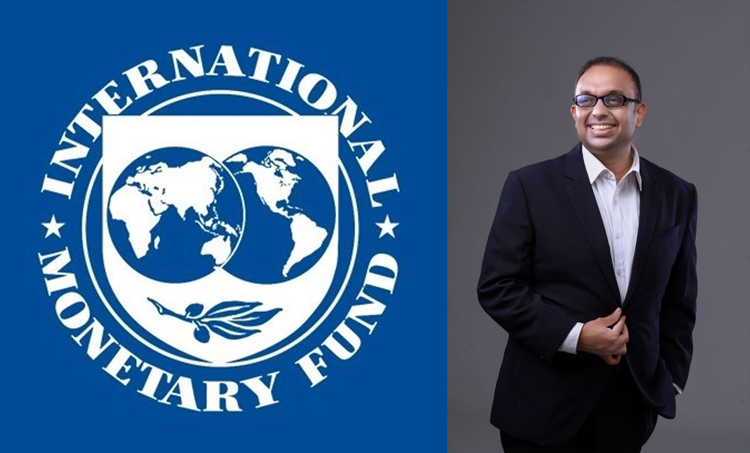
By Thareendra D. Kalpage
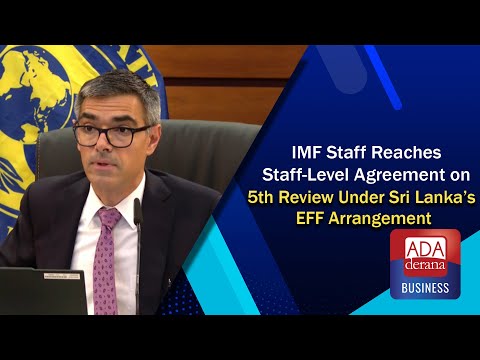
The completion of the International Monetary Fund’s combined Fifth and Sixth Reviews under Sri Lanka’s Extended Fund Facility is an important milestone. The IMF Executive Board’s approval on 28 May 2026 released SDR 508 million, approximately US$695 million, bringing total disbursements under the 48-month programme to SDR 1.778 billion, or about US$2.4 billion. The latest tranche, along with the US$206 million emergency financing received in December 2025 following Cyclone Ditwah, reinforces the extent to which external support continues to underpin Sri Lanka’s recovery.
For a country that stood close to economic collapse in 2022, this is meaningful progress. When the IMF programme was approved in March 2023, reserves had fallen to US$1.9 billion, the rupee had lost more than half its value, shortages had disrupted daily life, and public debt sustainability had broken down. The programme was therefore not simply about financing. It was a framework to restore stability, rebuild fiscal credibility, safeguard the financial system, and place public debt on a more sustainable path.
Stabilisation gains are visible
On several core indicators, Sri Lanka has delivered. Total government revenue reached 16.6 percent of GDP in 2025, up from approximately 8.4 percent of GDP in 2022 — a near-doubling that reflects the scale of fiscal correction achieved under the program. Tax revenue alone rose from around 7.3 percent of GDP to 14.8 percent over the same period, according to IMF figures, exceeding the program’s target of at least 14 percent of GDP. This was supported by higher VAT rates, stronger income tax enforcement, and motor vehicle import taxes after vehicle imports resumed. The country also recorded a primary budget surplus, meeting the 2025 benchmark of 2.3 percent of GDP.
The wider macroeconomic picture has improved as well. The economy grew by 5 percent in 2025, GDP per capita reached US$5,003, inflation returned to positive territory at 2.2 percent year-on-year by March 2026, and gross official reserves rose to around US$7 billion by end-March 2026. These are not cosmetic gains. They reflect difficult policy correction, external support, and the burden carried by households and businesses.
The unfinished reform agenda
Yet the IMF’s language should not be read as an all-clear signal. Its assessment that programme performance was “generally strong” is paired with a more cautious message on structural reform. The Fund noted that most structural benchmarks were met or implemented with delay, and pointed to the need to complete public financial management, public investment management, and electricity sector reforms. Sri Lanka has done better on fiscal and monetary targets than on the deeper institutional changes required to prevent another crisis.
Energy pricing shows why this matters. Restoring cost-recovery electricity pricing was a prior action for the latest tranche, allowing the review to proceed. But pricing formulas are only as strong as the political will behind them. Subsidised fuel and electricity have repeatedly created losses in state enterprises, widened fiscal pressures, and weakened external balances. Reform will not be durable if it is later reversed under domestic political pressure.
Debt risk remains the central concern
The clearest warning in the IMF’s statement is that Sri Lanka’s debt sustainability risk remains “very high.” Although the crisis has been stabilised, the debt problem has not disappeared. External debt service remains manageable in 2026, but becomes more demanding from 2027 as restructured bilateral and commercial obligations, together with IMF repayments, begin to mature. The current programme expires in March 2027, leaving a narrow window to build reserves, sustain fiscal discipline, and raise foreign exchange earnings.
The reserve position also needs careful interpretation. Gross official reserves stood at approximately US$6.8 billion by end-April 2026, according to the Central Bank, while the IMF recorded US$7 billion at end-March. However, these figures include the People’s Bank of China swap, which is not freely usable in the same way as liquid reserves. The usable reserve buffer is therefore lower than the headline number suggests.
A return to international capital markets is unlikely to provide an easy solution. Sri Lanka’s sovereign ratings have improved from selective default, but remain in distressed territory. S&P rates the country at CCC+ with a stable outlook, Moody’s at Caa1, and Fitch at CCC+. At those levels, new international sovereign borrowing would likely carry high interest costs, reportedly in the range of 11 to 13 percent. Borrowing commercially at elevated rates to manage debt service would risk recreating the pressures that produced the crisis.
The next test is resilience
This is why the next phase of recovery cannot rely on stabilisation alone. Sri Lanka must expand exports, attract more durable foreign direct investment, strengthen public financial management, and maintain predictable policy frameworks. Investors need contract enforcement, tax stability, regulatory clarity, and confidence that policy will not change direction with each political cycle.
External shocks have made the task harder. Cyclone Ditwah caused economic disruption, while conflict in the Middle East has raised risks around oil prices, supply chains, tourism, and remittances. The IMF expects Sri Lanka’s growth to slow from 5 percent in 2025 to 3 percent in 2026 partly because of these pressures. But external shocks did not create Sri Lanka’s underlying vulnerabilities. A narrow export base, weak investment performance, debt-funded growth, and repeated fiscal slippages were visible long before 2022.
The latest IMF review should therefore be understood as a qualified success. Inflation is under control, reserves have recovered from crisis lows, revenue has improved, and fiscal discipline has been restored. But stabilisation is not transformation. Sri Lanka has reached this point before, with temporary stability, renewed optimism, and unfinished reform. The difference this time must be the discipline to complete the structural work before the next shock arrives. The IMF review is not a celebration. It is a reminder that survival has been achieved, but resilience has still to be built.
(The writer is an entrepreneur, startup investor, business leader, contributor to numerous print and digital media news channels, and an avid observer of the global political landscape, economy, and technological and social developments.)
Video Story