

July, 15, 2026
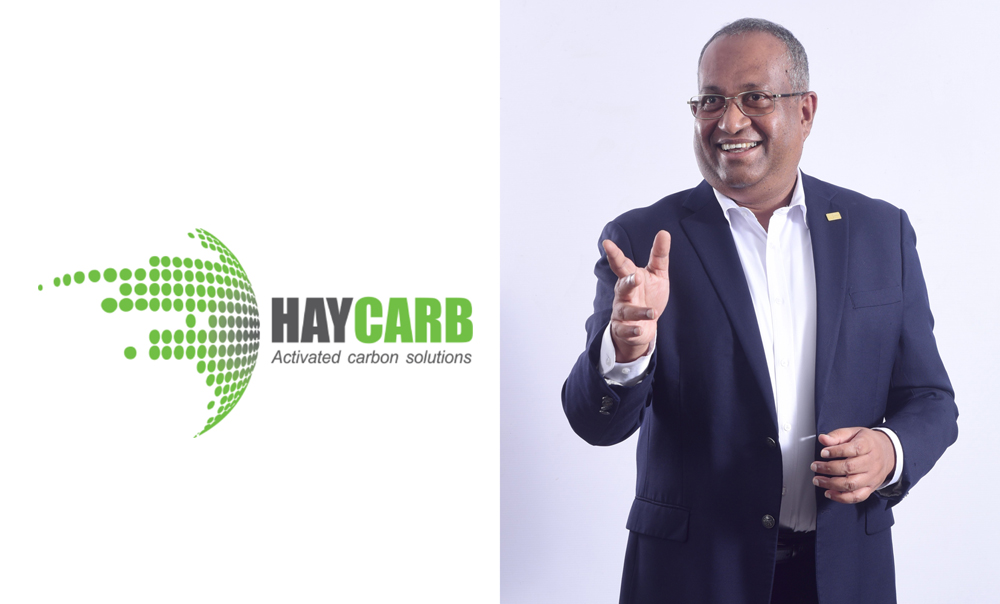
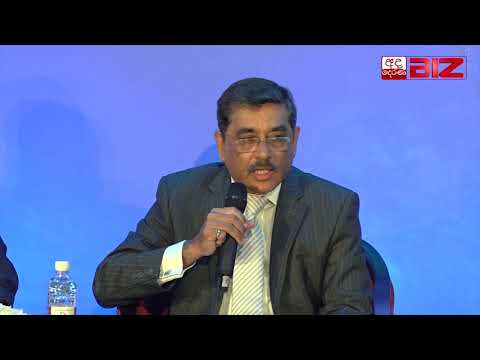
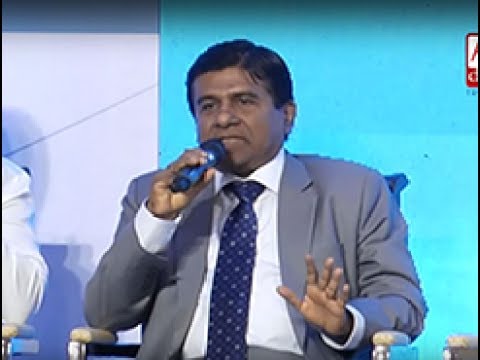
Rajitha Kariyawasan
Managing Director, Haycarb PLC
"The reasonable man adapts himself to the world; the unreasonable one persists in trying to adapt the world to himself. Therefore, all progress depends on the unreasonable man." – George Bernard Shaw
The world is in the midst of a profound shift. The accelerating transition toward electrification in transport, grid-scale energy storage and the devices that power modern life is creating demand for advanced materials that did not exist on a commercial scale a decade ago. At the heart of that demand are the battery technologies driving this transition. And at the heart of those batteries are the carbon materials that determine their performance, safety, and longevity.
As this transition accelerates, the development of advanced battery materials has also become increasingly competitive, with performance, consistency, and reliability emerging as key differentiators. This is the space Haycarb has chosen to enter not as a peripheral participant, but as a developer of high-performance activated carbon engineered specifically for next-generation energy storage applications. What makes this journey particularly significant is that it is being built from Sri Lanka, demonstrating the country’s ability to develop and manufacture advanced materials for highly technical global industries.
The independent recognition we recently received at the Presidential Export Awards 2024/25, and the Overall Award for Innovative Export Product of the Year for our HCE 400 product series, is a meaningful validation of what we have built. But the award is a milestone, not the destination. The larger story is where we are going and why.
What we have built: HCE 400 and silicon-carbon composite anodes
The HCE 400 is a novel high-purity activated carbon engineered for silicon-carbon composite anodes in lithium-ion batteries. Silicon-carbon composite anodes represent one of the most significant advances in battery materials science, enabling substantially higher energy density compared to conventional graphite anodes, extending the range of electric vehicles and improving the performance of grid storage systems.
Developing a carbon material capable of performing in this application is a demanding undertaking. It requires not just chemical purity, but manufacturing precision at a level most activated carbon producers have not needed to achieve.
At Haycarb, we have built that precision from the ground up. Our processes enable precise control of particle size and consistency, while advanced testing capabilities ensure the detection of trace metal contaminants at extremely low levels, both critical requirements for high-performance battery applications.
These were not incremental improvements. They were entirely new capabilities, developed in-house because the application demanded nothing less.
Alongside product development, we have invested in advanced electrochemical laboratory facilities that allow us to test, validate and refine our materials against real-world battery performance requirements. This ensures that our development cycle is closely aligned with application performance, an essential requirement when working with global customers operating at the cutting edge of energy storage technology.
We are now seeing these capabilities translate into commercial adoption, with HCE 400 supporting customer qualification programs and production requirements across multiple international markets. Several customers have successfully validated the material and are progressing through various stages of commercialization, reflecting both the technical demands of silicon–carbon anode applications and the relevance of Haycarb's engineered porous carbon solutions.
“The true measure of sustainable innovation is not whether it works in a laboratory, but whether it performs reliably, at scale, in the real world.”
The scale of our commitment
At Haycarb, we have backed our conviction in the energy storage opportunity with meaningful long-term investment. Our recently announced USD 18 million BOI-approved expansion is dedicated to scaling our energy storage carbon production capabilities, supported by advanced manufacturing infrastructure designed for the precision and consistency required by next-generation battery materials. Upon completion, the facility will have the capability to manufacture high-performance carbon for both supercapacitor and silicon-carbon anode applications, strengthening our position in the rapidly evolving energy storage value chain.
This investment reflects our view that the global transition to electrification is not a trend to observe from a distance, but a structural shift to actively participate in. It also reflects our confidence that Haycarb has the technical foundation, operational discipline, and talent to compete on a global scale.
Importantly, this expansion builds on a strong and stable foundation. Our core activated carbon business, serving water purification, air treatment, gold recovery, and a wide range of industrial applications continues to generate consistent performance. That foundation enables us to invest in future-facing opportunities with both confidence and discipline.
Rooted in sustainability: from coconut shell to clean energy
A defining dimension of Haycarb's energy storage journey is its foundation in sustainability. Coconut shell, the raw material used in Haycarb’s activated carbon, is a by-product of Sri Lanka’s long-established coconut industry, which has supported rural livelihoods and economic activity for generations.
What begins as the shell of a coconut grown by a smallholder farmer is transformed into a high-performance material used in advanced energy systems. That origin is important, as it underpins the sustainability and traceability of our materials.
Our commitment to sustainability extends across the entire value chain. Through initiatives such as Haritha Angara, along with our patented Recogen green charcoaling technology implemented across our manufacturing operations, we have supported the transition from traditional open-pit charcoaling to environmentally responsible closed-pit systems. Today, a significant portion of our supplier network operates using this eco-friendly model.
We source from over 400 micro-entrepreneurs across Sri Lanka and our overseas operations, ensuring that the sustainability of our energy storage materials is embedded not just in the product, but in how it is produced.
People, purpose, and the culture behind innovation
Innovation of this nature is not driven by systems alone, it is driven by people.
Our scientists, engineers, manufacturing teams, and commercial teams worked together over several years to bring this capability to life. From developing the material and building processes from scratch, to identifying the right markets and establishing global customer relationships, each function played a critical role in translating technical innovation into real-world application.
At every stage, the team chose to believe in the possibility of success and to act on that belief.
This is rooted in our purpose, brand values, and culture; built on customer centricity, technical excellence, innovation, and a strong focus on sustainability, empowering our people to realise their full potential, envisioning the future with clarity and courage, and enriching the lives of the communities and customers we serve. These principles define how we work and why we are able to take on challenges of this scale.
What recognition represents – and what comes next
The Presidential Export Awards are a recognition of performance. But they are also an opportunity to reflect on what it takes to build innovation that can be sustained; technically, commercially, and operationally over time.
Sustainable innovation is not an aspiration; it is a strategy. It requires long-term commitment, disciplined execution, and the willingness to invest ahead of demand. When these elements come together, supported by a capable team and a clear sense of purpose, meaningful progress becomes possible.
Sri Lanka has the capacity to build globally competitive, high-technology industries. Haycarb’s fifty-year journey, and its entry into the global energy storage market, demonstrate what is possible when that capability is supported by sustained investment and a long-term perspective.
The opportunity ahead is significant. As global demand for advanced energy storage continues to grow, so too does the role of materials innovation in enabling that transition.
Haycarb’s journey reflects a broader shift, from traditional materials to advanced applications, from local capability to global relevance, and from established expertise to new frontiers of innovation.
Rajitha Kariyawasan is the Managing Director of Haycarb PLC, a subsidiary of Hayleys PLC and a global leader in the manufacture and supply of coconut shell based activated carbon, exporting to markets across five continents.
Video Story