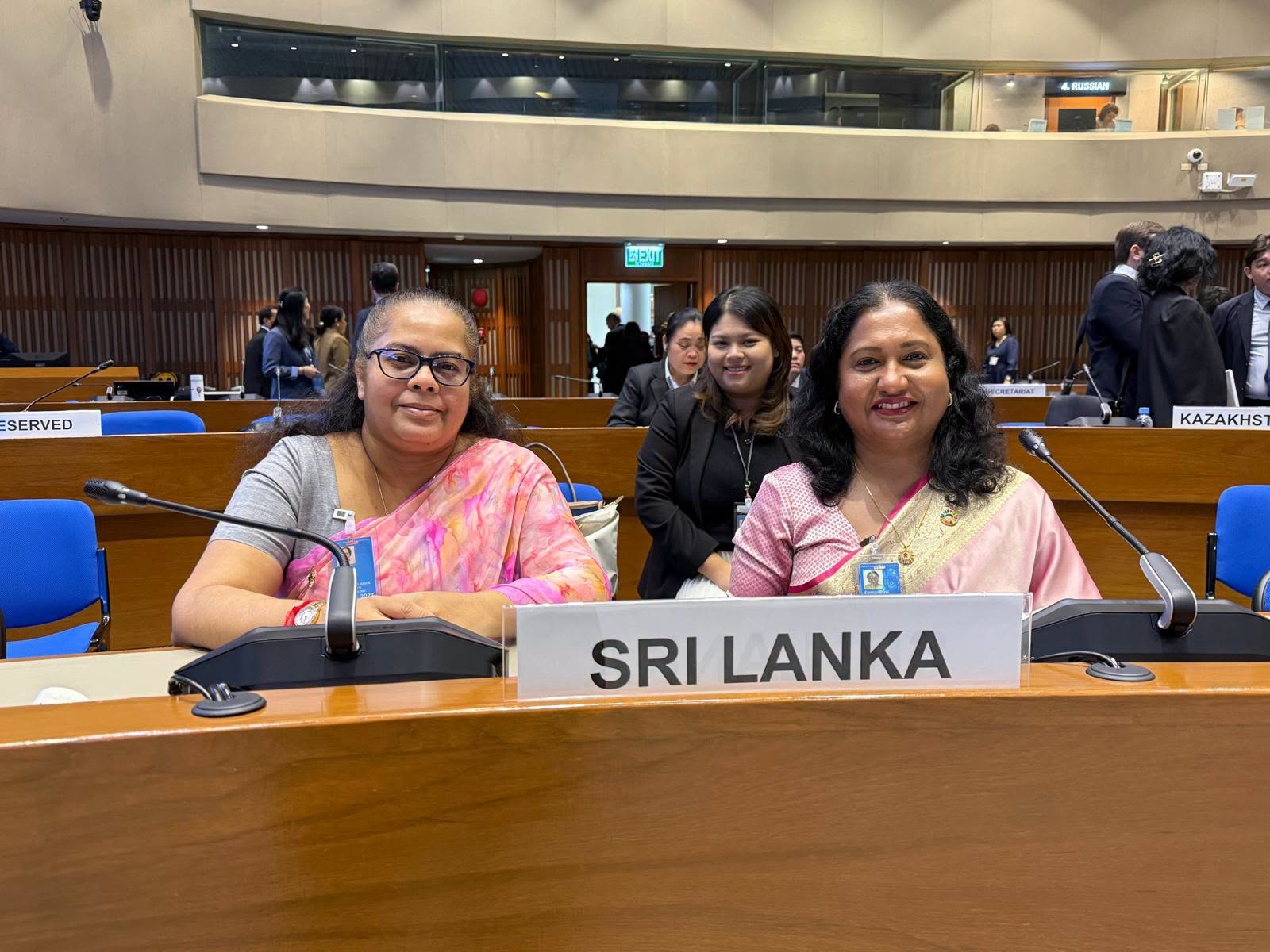
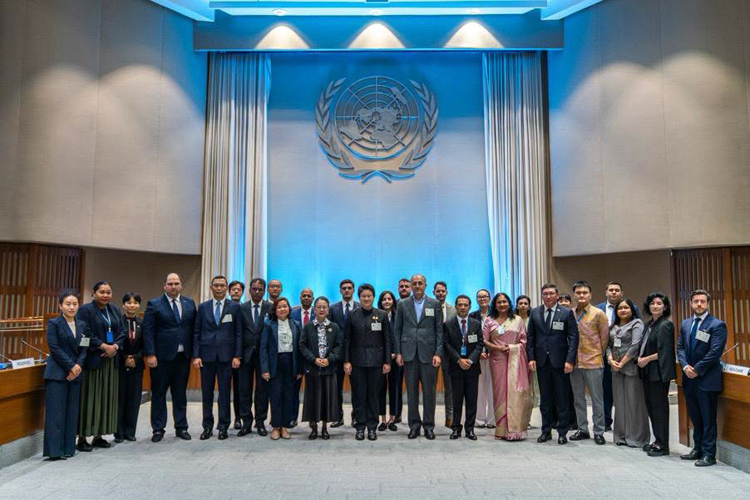
Ambassador of Sri Lanka to Thailand and Permanent Representative to ESCAP, H.E. Wijayanthi Edirisinghe, reaffirmed Sri Lanka’s commitment to promoting an inclusive, secure, people-centred and digitally connected Asia-Pacific at the 5th Session of the Committee on Information and Communications Technology (ICT) of ESCAP, held from 2–4 September 2026 in Bangkok.
The Ambassador highlighted Sri Lanka’s efforts to harness digital transformation, science, technology and innovation as key drivers of sustainable development, economic growth and shared prosperity. She emphasized that digital transformation should be people-centred and inclusive, enabling citizens to access essential services, participate in the digital economy and benefit from technological innovation. In this regard, she referred to Sri Lanka’s Digital Economy Strategy and Blueprint 2025–2030, which identifies digital inclusion as a key pillar of the country’s digital transformation agenda.
Sri Lanka underscored the importance of Digital Public Infrastructure (DPI) in expanding access to financial, educational and public services and facilitating broader participation in the digital economy. The Ambassador also stressed that digital transformation must be supported by trust, cybersecurity, data protection and privacy, highlighting Sri Lanka’s efforts in strengthening personal data protection, digital interoperability in the public sector and electronic commerce.
The Ambassador further highlighted Sri Lanka’s commitment to science, technology and innovation, including efforts to strengthen collaboration among research institutions, universities and industry through University Business Linkage and Institutional Business Linkage initiatives, as well as Technology and Innovation Support Centers that facilitate access to intellectual property and technology-transfer services.
With regard to regional cooperation, Sri Lanka welcomed efforts under the Asia-Pacific Information Superhighway (APIS) to strengthen digital connectivity and expressed support for the proposed APIS Action Plan 2027–2030. Sri Lanka emphasized the need for greater regional cooperation in research, technology development, knowledge-sharing and capacity-building, while recognizing the differing levels of digital development and capacities among countries in the region.
The Ambassador also highlighted Sri Lanka’s contribution to Science, Technology and Innovation cooperation under BIMSTEC, including through the Technology Transfer Facility in Colombo. Sri Lanka expressed its readiness to contribute further to regional technology transfer, innovation and research collaboration and supported regional platforms such as the Asian and Pacific Digital Solutions Centre for sharing practical digital solutions and expertise.
Recognizing the varying stages of digital transformation across Asia and the Pacific, Sri Lanka called for enhanced technical assistance, training, capacity-building and technology exchange, as well as greater participation of national institutions in regional initiatives.
The Ambassador reaffirmed Sri Lanka’s readiness to work closely with ESCAP and Asia-Pacific partners to translate shared commitments into practical outcomes, contributing towards a secure, inclusive and digitally integrated Asia-Pacific where technology serves as an enabler of sustainable development, innovation and shared prosperity.
The meeting was attended by Ms. Thilini Ihalage, Minister Counsellor/Head of Chancery of the Embassy and Ms. Bantarawan Kongpongsa, Assistant to Permanent Representative to UNESCAP.